
These resources are here to support you — whether you’re looking for quick reassurance, deeper understanding, or something practical you can use right away.
You don’t need to explore everything at once.
What You’ll Find Here
Resources may include:
-
Articles and reflections
-
Short videos
-
Downloadable tools
-
Links to books and guides
All are designed to support understanding and reduce overwhelm.
Free Resource Downloads
When A Loved One is Being Scammed
When a loved one with mild cognitive changes is being scammed, the primary goal is to protect judgment and preserve dignity. It is crucial to remember that behavior is communication; scam vulnerability may reflect changes in risk evaluation, impulse control, and response to urgency. This is not about intelligence.
These two infographics offer ways to approach without shame and to preserve dignity.
Why Reassurance Stops Working in Dementia
Reassurance depends on the brain’s ability to process language, recall context, and regulate emotion — abilities dementia often disrupts. This guide explains why phrases like “you’re safe” or “it’s okay” may increase distress instead of calming it, and why reassurance can stop working even when intentions are good.
It helps care partners and clinicians understand what’s happening in the brain so they can respond in ways that reduce escalation rather than add to it.
📄 A short, printable guide designed to be shared when reassurance no longer helps.
Why Pain Is Often Missed in Dementia
Pain in dementia does not always show up as complaints or clear reports.
This guide explains why standard pain questions may fail, how distress can be misinterpreted as behavior, and why pain may go untreated even when medication is available.
It offers a brain-based framework for understanding pain when self-report is unreliable, supporting better communication between families and clinicians.
📄 A concise guide for care partners and healthcare settings.
Why Waiting and “Getting Ready” are So Hard in Dementia
Waiting and preparation rely on the brain’s ability to hold time, sequence steps, and tolerate uncertainty — functions commonly affected by dementia.
This guide explains why everyday moments like getting dressed, waiting to leave, or preparing for appointments can trigger anxiety or distress, and why rushing or repeated reminders often make things worse.
It helps families and clinicians understand the brain-based reasons behind these reactions so situations can be approached with less pressure and more clarity.
📄 A short, shareable guide for common daily challenges.
Early Stress & Access Narrowing Reflection Sheet Early Stress & Access Narrowing Reflection Sheet
Books
My books are written for people who want to understand dementia behaviors more clearly — without blame, jargon, or unrealistic expectations.
They’re designed to be read at your own pace and returned to as understanding evolves.
Meaningful Activities
As cognitive abilities change, a person’s need for meaning, respect, and connection does not. When activities reflect who someone is — not just what they can or cannot do — engagement feels safer, calmer, and more sustaining.
The activities shared here are designed to support adult identity, respect life experience, and create moments of genuine connection — without talking down, infantilizing, or reducing a person to a diagnosis.
These kits are built on a dignity-first, role-centered framework.
Roles protect dignity by preserving choice and contribution—without turning engagement into a test.
If activities have started to trigger refusal, agitation, or shutdown, role-based engagement often feels calmer and more workable.
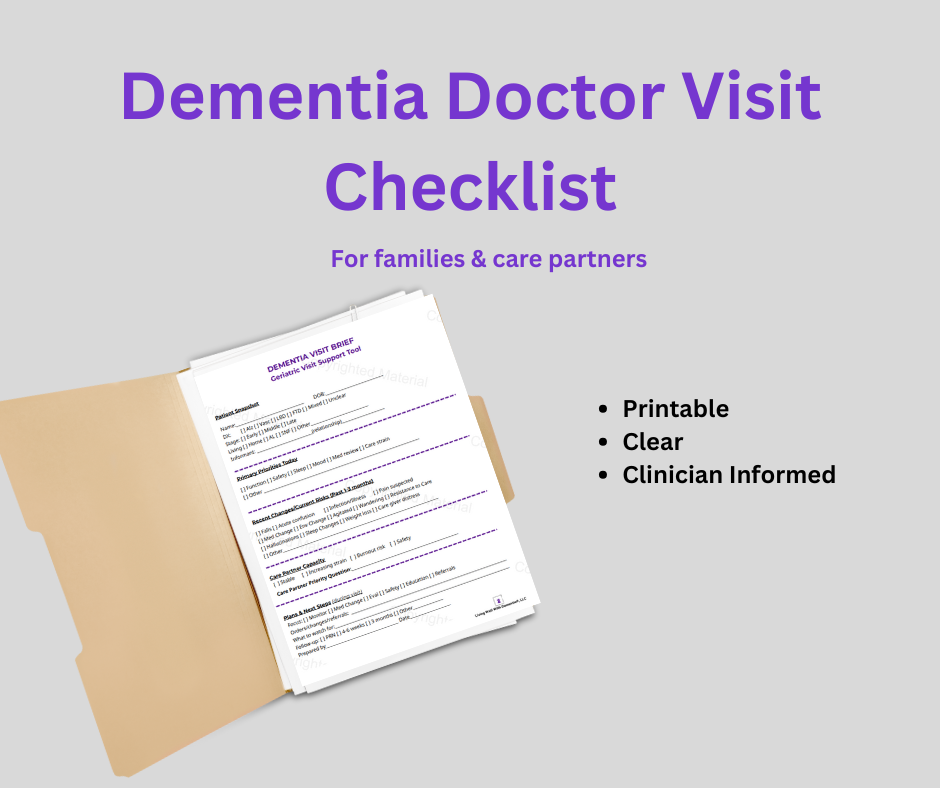
Guides and Toolkits
Toolkits and Guides Include:
Amazon Affiliate Links
Below are some products and resources that I have found helpful for my clients and friends. Please note, these are affiliate links and I receive a small commission (with no increase in cost to you) if you use this link to purchase.
- Dementia Beyond Drugs Book by G. Allen Power, MD
- From Strength to Strength: Finding success, happiness, and deep purpose in the second half of life. Book by Arthur Brooks
- Apple Air Tag (4 pack) – I’ve used these with my parents (with permission) to place on their keys. I even did it for my keys!
- UNBREAKcable Air Tag Holder – As above, these are what we used to attach to keyring.
- Door Alarms – these notify you of someone leaving unexpectedly.
- Identification Bracelet – if your loved one leaves home and becomes lost, these can be engraved with contact information.