
Meaningful engagement doesn’t disappear with dementia — but it does need to change.
Many available activities for people living with dementia feel childish, oversimplified, or disconnected from who the person has been throughout their life.
The activities I create are designed to support adult identity, respect life experience and create moments of genuine connection — without talking down, infantilizing, or reducing a person to a diagnosis.
Why Dignified Engagement Is Essential
As cognitive abilities change, a person’s need for meaning, respect, and connection does not. When activities reflect who someone is — not just what they can or cannot do — engagement feels safer, calmer, and more sustaining.
Meaningful activity is not about “keeping someone busy.”
It is about:
- honoring identity
- supporting emotional well-being
- maintaining connection
- reducing stress and disengagement
When people feel seen and respected, distress is less likely to build.
What Makes These Activities Different
These kits are built on a dignity-first, role-centered framework.
Roles protect dignity by preserving choice and contribution—without turning engagement into a test.
If activities have started to trigger refusal, agitation, or shutdown, role-based engagement often feels calmer and more workable.
These activities are intentionally designed to be:
- Adult and non-childlike in language, visuals, and tone
- Flexible, allowing the person to engage at their own level
- Respectful of life experience, not based on “simple tasks”
- Connection-focused, not performance-based
- Adaptable across stages of dementia
There is no expectation to complete, achieve, or “do it correctly.”
The goal is presence, engagement, and dignity.
How Families and Care Partners Use These Activities
These activities can be used:
- one-to-one or in small groups
- in short moments or longer conversations
- at home or in care settings
- as part of daily routines or special visits
They are especially helpful when:
- conversation feels harder to sustain
- boredom or disengagement is increasing
- connection feels strained
- you want something meaningful without pressure
There is no right way to use them.
They are invitations — not instructions.
Roles, Purpose & Contribution
Activities in this collection invite people living with dementia to step into meaningful roles that emphasize judgment, experience, and contribution — not memory or performance.
Each activity positions the person as someone whose perspective matters.
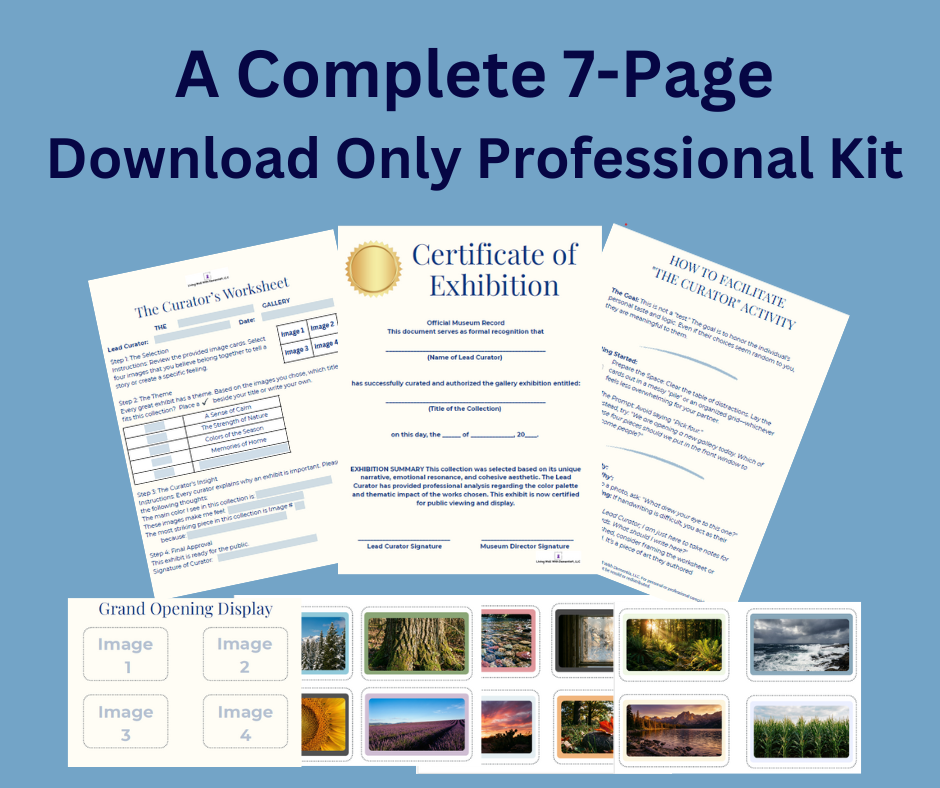
Museum Curator Kit
Invites the person to curate an art display using their judgment, taste, and perspective.
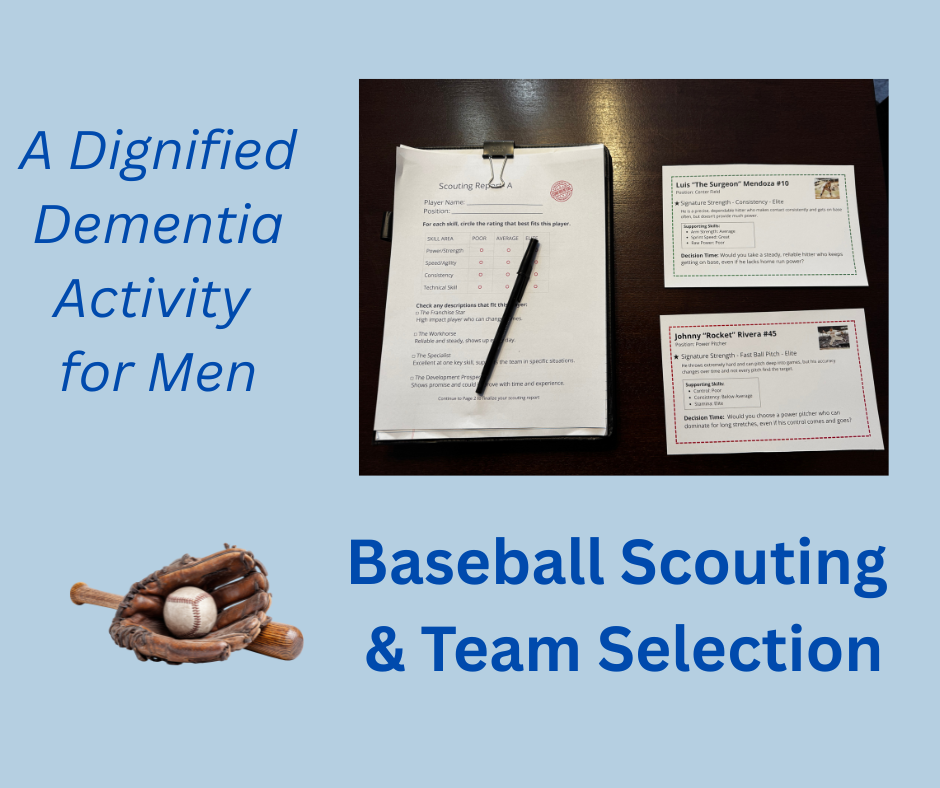
Baseball Scout Kit
Invites the person to evaluate players and build a team using experience and instinct.
Living Well With Dementia, LLC | Dignity-first, role-centered engagement
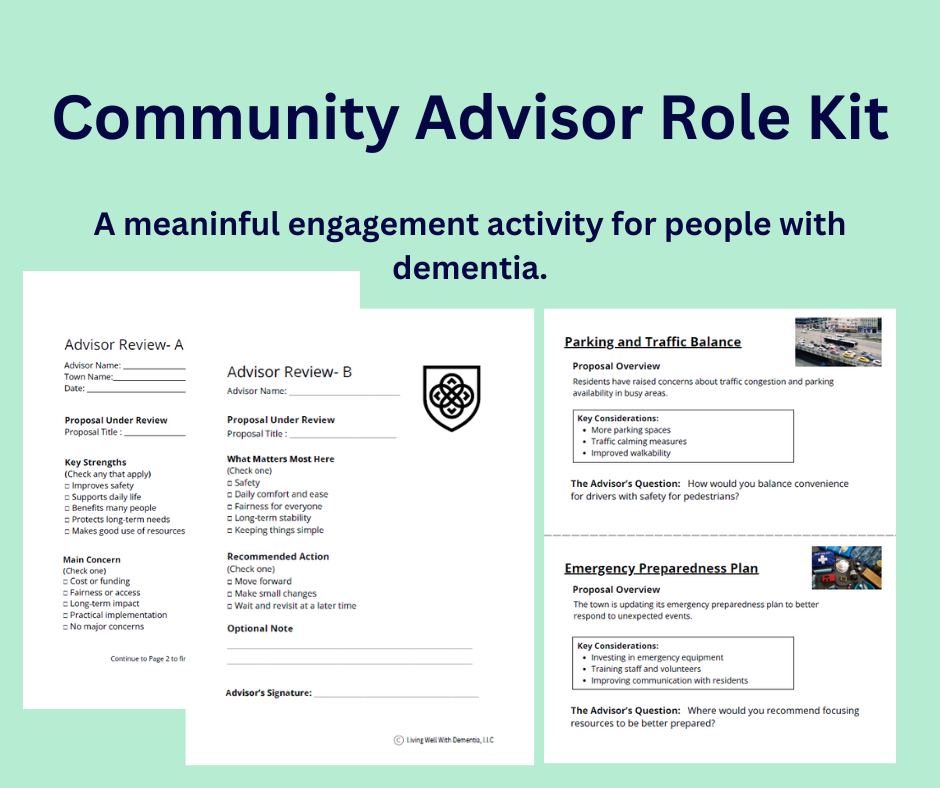
Community Advisor Kit
Invites the person to evaluate community activities using their judgment and perspective.
Frequently Asked Questions
What is included in the Curator, Scout, and Advisor kits?
Each kit includes structured cards, facilitator guidance, and documentation forms designed to support meaningful role-based engagement tailored to different cognitive levels.
Which kit is best for early versus later-stage dementia?
Advisor and Scout roles often suit earlier stages requiring judgment or observation, while Curator roles can be adapted for later stages with more sensory and preference-based engagement.
Can these kits be used by families at home?
Yes. The materials are designed for both family care partners and professionals and include clear instructions to support respectful, successful use.
How do these kits support role-based engagement?
They provide structured opportunities for individuals to express identity, preferences, and contribution rather than passively participate in generic activities.
Are the kits appropriate for professional care settings?
Yes. They are suitable for individual, small group, and interdisciplinary use within person-centered care models.